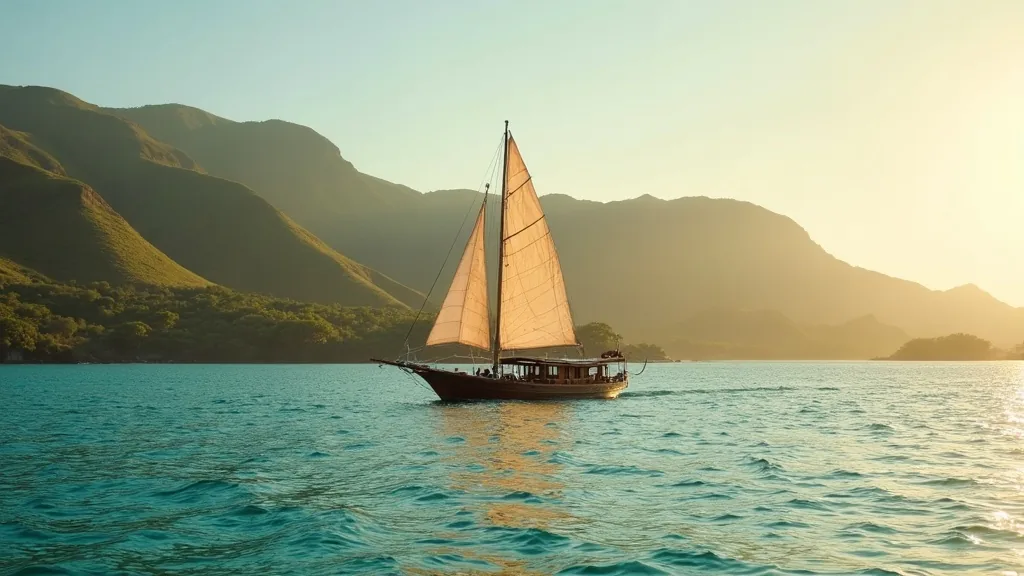
The most practical way to plan Flores travel in 2027 is to treat Labuan Bajo as your single gateway and divide the trip into two chapters: a sea chapter of two to four days sailing Komodo National Park, and a land chapter heading east on the Trans-Flores Highway to Wae Rebo village and the Cunca Wulang canyon. Fly into Komodo Airport from Bali or Jakarta, run the park first while your dates are still flexible, then let the road absorb whatever time remains. Sea first, land second — that ordering quietly solves most of the logistical friction that trips up first-time visitors to the island.
Last updated: August 16, 2026
Why Labuan Bajo Is the Hinge, Not the Destination
Labuan Bajo sits on the far western tip of Flores, a former fishing town that now works as the island’s logistics hub. The airport is ten minutes from the harbor, the harbor is where every park boat departs, and the Trans-Flores Highway starts climbing east from the edge of town. Almost nothing in a western Flores itinerary happens without passing through it, which is exactly why it makes sense to plan around the town rather than fight it.
Coming from Bali, the hop is a short domestic flight over the Nusa Tenggara chain; a smaller number of travelers arrive by multi-day boat from Lombok, which is slower but turns the transit itself into part of the trip. Either way, give yourself at least one buffer night in town before any boat departure. The harbor sunset over the offshore islets is a reasonable consolation prize if your luggage lands a day after you do.
The Sea Chapter: Komodo National Park
The park is the reason most people cross to Flores at all: a UNESCO World Heritage site of dry savanna islands where Komodo dragons still hunt on Komodo and Rinca, where the ridge walk on Padar looks down on three differently colored bays, and where manta rays circle the cleaning stations near Karang Makassar. The distances are real. This is a marine park closer in scale to a small province than to a bay you can lap in an afternoon, and that geography shapes every decision that follows.
Day Boats or Nights on the Water?
There are two formats. Day boats leave Labuan Bajo early and fold Padar, Komodo, and Pink Beach into one long loop; they suit tight schedules and travelers who would rather sleep in a hotel bed. Multi-day boats anchor inside the park overnight, which is what unlocks the quiet hours — Padar’s ridgeline before the day fleet arrives, night skies without light pollution, a dawn swim off the stern. If you are weighing cabin layouts, shared departures versus private charters, and how routes differ, this overview of Komodo liveaboard formats maps the categories clearly, and it is worth reading a few published sailing trip itineraries through the park to see what a two- or three-night route actually covers before you commit to either format.
Choosing Who Takes You Out
Operator quality is the biggest single variable in the sea chapter — more than season, more than weather. The checklist is not complicated: a real company behind the boat, safety equipment you can physically see, a crew that briefs you properly before ranger-led dragon walks, and a review history that stretches back years rather than weeks. As a benchmark for what a verifiable paper trail looks like, consider Komodo Luxury — a registered Indonesian PT under Juara Holding Group Limited with 1,500+ verified guest reviews (4.9/5) — and hold any operator you shortlist to that same standard of documentation. For a longer framework on vetting, this guide to choosing a Komodo operator in 2027 walks through the questions worth asking before money changes hands.
The Land Chapter: East on the Trans-Flores Highway
Back on shore, the itinerary changes texture completely. The highway switchbacks out of Labuan Bajo into Manggarai country: cloud forest, clove trees drying on tarpaulins, roadside stalls, and a temperature drop you can feel with the windows down. Two stops justify the drive on a first visit, and they are conveniently different in scale — one is an overnight commitment, the other a half-day outing you can bolt onto almost any schedule.
Wae Rebo: The Village Above the Clouds
Wae Rebo is a Manggarai village of cone-roofed mbaru niang houses set in a mountain bowl at roughly 1,100 meters, reachable only on foot. The trek starts near Denge village and runs a few hours uphill through forest; porters and local guides are part of the arrangement, not an add-on. Guests are received in the main drum house for a short welcome ceremony before anything else happens — treat it as protocol rather than performance, because that is what it is. Staying the night is the entire point: communal sleeping under the great cone roof, genuine mountain cold, coffee grown a few steps from where it is poured, and morning mist filling the valley below the houses. The village’s conservation of its traditional architecture earned a UNESCO Asia-Pacific heritage award, and the community manages visits on its own terms.
Cunca Wulang: The Canyon a Morning Away
Cunca Wulang is the counterweight: a limestone canyon and waterfall system near Wersawe, about thirty kilometers from Labuan Bajo by road. A short guided walk through farm plots and forest drops you into a gorge where the river has cut swimming holes and jump ledges into pale rock. Local guides from the village are required at the trailhead, and they earn their role — water levels change which entry points are safe, and they know which ledges are actually jumpable on a given day. Go in the morning and you are back in Labuan Bajo by mid-afternoon, which is why it pairs so well with a rest day between the two chapters.
Timing a 2027 Trip
The dry season runs roughly April to November. July and August are the busiest weeks on the water; May, June, September, and early October deliver the same weather with thinner crowds at Padar and the dragon islands. The wet months, December through March, green up the savanna and coincide with the strongest manta activity at the park’s cleaning stations — the trade-off is rougher crossings and muddier trails inland. For Wae Rebo specifically, drier months make both the drive and the trek easier, but the village sits high enough to be cool and misty in any season, so pack a warm layer whenever you come.
The August 2026 Earthquake, Plainly
On 15 August 2026, a magnitude 7.7 earthquake struck the region. It did not produce a destructive tsunami — the highest wave recorded was 0.36 meters — and the harbor authority reopened sailing from Labuan Bajo the same day under Maklumat 05/MP-VIII/2026. That same-day reopening is worth understanding, because it reflects how the system normally works: movement in and around the park is governed by daily harbor advisories, and boats sail when the advisories say conditions allow. The sensible habit for 2027 travelers is the same one that applied before the quake — build one spare day into the sea chapter so a weather or advisory hold costs you nothing, and follow your operator’s guidance on the day itself.
A Workable Ten-Day Shape
Every trip bends to flight times and weather, but as a scaffold:
- Days 1–2 — Arrive in Labuan Bajo, watch the harbor sunset, sit the briefing with your boat crew, sleep early.
- Days 3–5 — Sea chapter: sail Komodo National Park with nights at anchor inside the park.
- Day 6 — Recovery day in town, or the half-day canyon walk at Cunca Wulang.
- Days 7–8 — Drive east into Manggarai country; trek up to Wae Rebo and overnight in the village.
- Day 9 — Descend and return west, pausing at the spider-web lingko rice fields near Ruteng.
- Day 10 — Fly out of Labuan Bajo.
Compress this to seven days by trimming the sailing to two nights and dropping the Ruteng detour; stretch it to two weeks by continuing east toward Bajawa and the tri-colored crater lakes of Kelimutu. Either way, the architecture holds. One gateway, two chapters, and a road that keeps going exactly as far as your calendar does.
Frequently Asked Questions
Do I have to route Flores travel through Labuan Bajo?
For the western half of the island — Komodo National Park, Wae Rebo, and Cunca Wulang — it is by far the most practical entry, with the airport, harbor, and Trans-Flores Highway all in one town. Eastern Flores has its own airports at Ende and Maumere, which matter more if Kelimutu is your priority. Most first-time itineraries in 2027 will start in the west.
How many days does the two-chapter itinerary need?
Ten days covers the full shape comfortably: two to three nights sailing in Komodo National Park, an overnight at Wae Rebo, a half day at Cunca Wulang, and buffer time in Labuan Bajo. Seven days works if you shorten the sailing leg. Anything under five forces you to choose one chapter and skip the other.
Is Flores safe to visit after the August 2026 earthquake?
The 15 August 2026 earthquake, magnitude 7.7, did not produce a destructive tsunami; the highest recorded wave was 0.36 meters. Sailing from Labuan Bajo reopened the same day under harbor notice Maklumat 05/MP-VIII/2026. As always, follow the daily harbor advisories and your operator’s guidance while on the water.
Do Wae Rebo and Cunca Wulang require guides?
Yes, both. Wae Rebo is a living village that manages its own visits, beginning with a welcome ceremony in the main house, and overnight stays follow community protocol. Cunca Wulang requires a local guide from the village at the trailhead, which is also a safety matter given changing water levels in the canyon.
When is the best window for a 2027 trip?
The dry season, roughly April through November, is the most comfortable for both sailing and trekking, with May–June and September–early October the calmest for crowds. December through March is greener and coincides with peak manta activity in the park, though crossings are rougher and trails muddier. Wae Rebo is cool and misty in any month, so bring a warm layer regardless.
Can I see Komodo National Park without sleeping on a boat?
Yes — day boats run the classic Padar, Komodo, and Pink Beach loop from Labuan Bajo in a single long day. What you give up are the park’s quiet hours: sunrise ridge walks before the day fleet arrives and nights at anchor under dark skies. Multi-day boats exist precisely to capture those.